
How to Build Confidence After Rejection
Dec 21, 2025Almost everyone I work with has the same secret fear — the thing they hope we can avoid or outrun:
Rejection.
Not just romantic rejection.
Not just being turned down for a job.
Rejection in the broader sense:
Someone doesn’t react the way you hoped.
A text goes unanswered.
A date fades out.
A coworker withdraws.
A friend doesn’t reciprocate effort.
A group doesn’t include you.
Rejection in all its subtle forms.
For some people, rejection barely registers. They feel it, take a breath, and move on.
For others, it hits like a punch to the gut.
I’ve watched rejection collapse incredibly capable, intelligent, emotionally aware people — not because they’re weak, but because a deeper story gets triggered inside them.
A story of unworthiness.
A story of being “not enough.”
A story that says, “See? This is why you should stay quiet, stay small, don’t put yourself out there.”
But rejection doesn’t mean what you think it means.
And your entire relationship to it can change.
Rejection Isn’t the Problem — Meaning Is
A few weeks ago, someone inside my Unstoppable Confidence Mastermind described feeling crushed after a date didn’t text back.
Not disappointed.
Not mildly bummed.
Crushed.
Why?
Because he wasn’t just feeling the sting of a mismatch.
He was feeling the weight of an old belief:
“If someone doesn’t choose me, it proves I’m uninteresting.”
That’s not rejection.
That’s interpretation.
That’s the mind reaching back into old history — moments where you weren’t chosen, weren’t noticed, weren’t wanted — and pulling that pain into the present like it’s happening again.
This is why some rejections feel catastrophic, even when logically you know they shouldn’t.
The pain isn’t from the event.
It’s from the meaning attached to it.
Once you separate those two things, your resilience skyrockets.
Mismatches, Not Verdicts
Here’s the truth a lot of people don’t fully internalize:
Rejection is almost always a mismatch, not a verdict.
A mismatch of timing.
A mismatch of personality.
A mismatch of values, energy, goals, communication style, or expectations.
People choose based on their own fears, desires, patterns, wounds, and needs.
In other words:
People choose based on themselves — not on your value.
I know this intellectually makes sense.
But there’s a moment in growth when it stops being intellectual and becomes lived.
Someone says no, or disappears, or pulls back…
And instead of spiraling, something inside you stays steady.
You feel the sting, yes. You’re human.
But there’s no collapse.
No shame.
No self-punishment.
No story about your worth.
Just clarity:
“Oh, this wasn’t aligned. That’s useful information.”
That’s confidence.
Why Rejection Feels Like an Identity Threat
For most people, rejection hurts so much because it hits a deeper emotional structure called identity-level self-worth.
If you’ve spent years proving yourself — at work, in friendships, in dating — then every interpersonal interaction becomes a test.
A test you can pass or fail.
A test that determines whether you’re valuable, attractive, or enough.
So when someone doesn’t respond the way you hoped, it feels like your whole identity gets evaluated.
And rejected.
This is where people get frozen.
Instead of risking again, they withdraw.
Instead of expressing interest, they hold back.
Instead of showing their personality, they wait to be invited.
But confidence doesn’t grow by perfect outcomes.
Confidence grows by expanding your capacity to face outcomes.
Especially the disappointing ones.
Rejection Is Part of a Confident Life
There is no version of a powerful, connected, fully-expressed life that doesn’t include rejection.
Zero.
The people who have the richest dating lives get rejected the most.
The people with the deepest friendships risk the most vulnerability.
The best leaders hear “no” constantly.
The most creative people receive the harshest critiques.
The boldest souls experience the most contrast.
Rejection isn’t a sign you’re doing something wrong.
Rejection is a sign you’re alive.
When you stop trying to avoid it, something incredible happens:
Fear shrinks.
Your world expands.
You become freer.
And you stop bargaining with your own expression.
The Practice: Move Toward, Not Away
If you want to build confidence through rejection, you have to move toward the places you usually retreat.
Not recklessly.
Not forcefully.
But consciously.
This looks like:
- Sending the text even if you’re unsure of the response
- Saying what you feel even if it’s vulnerable
- Taking the next step instead of waiting
- Making the invitation instead of hoping they’ll make it
- Telling the truth about your interest
- Showing your personality instead of filtering it
Every time you do this, you reclaim something that was lost.
Your willingness to be seen.
Your willingness to try.
Your willingness to be imperfect.
Your willingness to be human.
And here’s the paradox:
The more you’re willing to experience rejection,
the less rejection hurts you.
Not because you’re numb.
But because you’re rooted.
The “Rejection Reframe” That Turns Pain Into Freedom
Here’s a simple but powerful shift I teach:
Feel the sting.
Drop the story.
Stay in motion.
The sting is human.
You don’t have to pretend it doesn’t hurt.
But the story —
“That means I’m not enough,”
“That means I’m boring,”
“That means I’m unattractive” —
that part isn’t truth. That’s conditioning.
Once you drop the story, you reclaim the present moment.
And once you stay in motion — expressing, reaching out, creating connection — you build the muscle of confident living.
It’s not about avoiding pain.
It’s about not letting pain define you.
If You Want to Go Deeper Into This Work
If rejection stops you, limits you, or shuts you down, there’s nothing wrong with you.
You’re not broken.
You’re conditioned.
And conditioning can be changed.
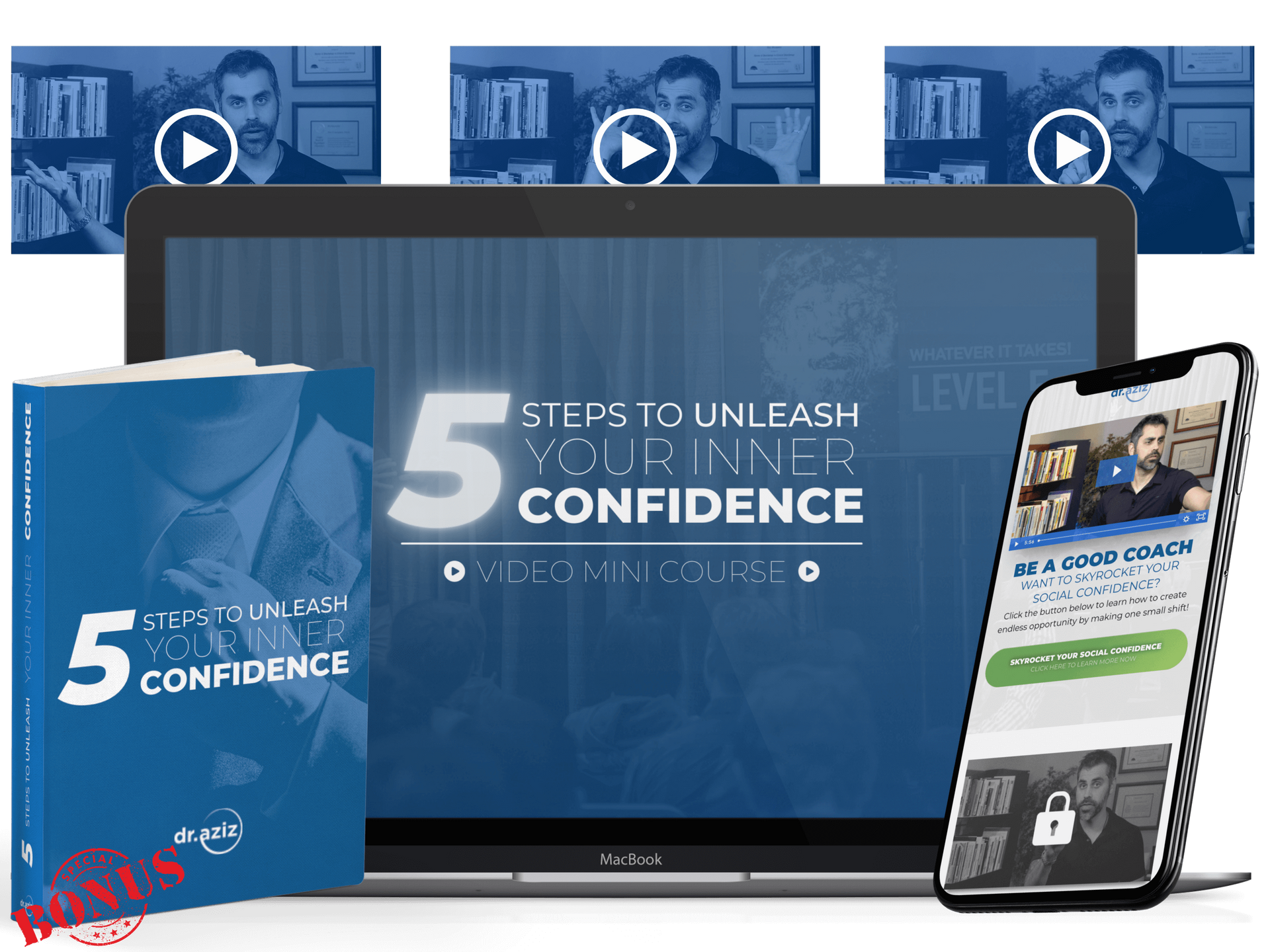
If you want practical tools to break old patterns and build real confidence from within, I created a short, free mini-course called:
5 Steps to Unleash Your Inner Confidence
https://www.socialconfidencecenter.com/minicourse
It will help you understand yourself more deeply — and start showing up in the world with the courage to be seen, chosen, and free.
Reading blogs and watching videos online is a start...
When you are ready to radically transform your confidence so you speak up freely, boldly go after what you want, connect easily with others and be 100% unapologetically yourself, coaching is the answer.

GET YOUR FREE CONFIDENCE MINI-COURSE NOW!
Unleash Your Inner Confidence Today!
Click On The Button Below To Get Your FREE Mini-Course Right Now!
GOT CONFIDENCE?

Confidence University is the culmination of all my years of work assisting others with overcoming social anxiety and building unstoppable confidence in its place. It's the next best thing to work with me one-on-one.