
Why the Right Choice Often Feels Wrong at First
Feb 08, 2026The Right Thing Will Feel Wrong (And That’s How You Know You’re Growing)
A client said something recently that stopped me for a moment.
She told me she had finally done the thing she had been avoiding for years. She spoke up. She said no. She didn’t smooth it over or explain herself away. She stayed with what was true for her.
And then she felt terrible.
Not relieved. Not proud. Not empowered.
She felt guilty. Tight. Unsettled. Like she had crossed some invisible line and now needed to fix it.
She said, “I thought this was supposed to feel good.”
That sentence captures one of the most misunderstood moments in the entire process of building confidence.
Because this is usually the point where people assume they’ve made a mistake.
Why We Expect Growth to Feel Clean
Most people carry an unspoken belief about confidence. They expect that once they do the “right” thing, their internal world should line up immediately. The fear should drop. The guilt should disappear. There should be a sense of clarity and resolution.
When that doesn’t happen, the mind fills in the gap.
Maybe I was too harsh.
Maybe I didn’t need to say no.
Maybe I’m overcorrecting.
Maybe I’m becoming selfish.
What’s actually happening in these moments has very little to do with whether the action was right or wrong. It has everything to do with conditioning.
For years, often decades, many people learn a simple rule: staying agreeable keeps connection intact. Saying yes keeps things smooth. Being accommodating keeps the peace. That rule doesn’t live as a conscious belief. It lives in the nervous system.
So when you act outside of it, your system reacts. Not with logic, but with alarm.
That alarm often shows up as guilt.
Guilt Is a Signal, Not a Verdict
One of the most important distinctions to understand here is that guilt does not automatically mean you did something wrong.
Guilt shows up when an internal rule is violated. Many of those rules were formed early, long before you had real choice or power. They were survival adaptations. Ways of staying connected. Ways of avoiding conflict or rejection.
The problem is that your life has likely changed, but those rules have not.
So when you say no to a family member, set a boundary at work, or stop managing someone else’s emotional comfort, your system reacts as if you’ve endangered something essential.
It’s not evaluating the present moment. It’s referencing the past.
That’s why doing the right thing can feel wrong.
A Small Moment That Reveals a Big Pattern
Someone in a recent call shared a moment that illustrates this perfectly.
Her father asked her for a favor. Her automatic response was yes, as it had always been. Then she paused and actually checked in with herself. She realized she didn’t want to do it. So she said no.
Nothing dramatic happened. No confrontation. No fallout.
And afterward, she felt a surge of guilt.
A voice immediately showed up, sounding very reasonable. It told her it wasn’t a big deal. That she could have just done it. That saying no was unnecessary.
That voice wasn’t wisdom. It was habit.
Her system was adjusting to a new reality. One where her needs mattered. One where connection didn’t require self-abandonment.
That adjustment phase often feels uncomfortable because the nervous system hasn’t caught up yet.
Growth Happens in the Aftermath
Most people focus entirely on the moment of action. Did I speak up or not. Did I say no or not.
That matters, but it’s only part of the work.
What actually determines whether confidence grows or collapses is what happens afterward.
If you act in alignment with yourself and then spend hours or days attacking yourself internally, your system learns that authenticity is dangerous.
If you act in alignment with yourself and then stay with the discomfort, offering reassurance rather than judgment, something different happens.
You begin to teach your nervous system that nothing bad occurred. That the relationship survived. That you survived.
This is how self-trust is built. Not through forcing bold actions, but through how you relate to yourself once the action is over.
Letting Others Have Feelings Without Taking Responsibility for Them
Another place people get stuck is in believing that being confident means preventing other people from feeling disappointed, frustrated, or uncomfortable.
It doesn’t.
You can be respectful, honest, and clear, and someone can still have feelings about it. Those feelings are not evidence that you did something wrong. They are evidence that you are dealing with real humans.
One of the most liberating shifts is realizing that you are responsible for how you show up, not for managing everyone else’s internal state.
When you stop trying to control emotional outcomes, you free up enormous energy. Conversations become clearer. Boundaries become steadier. And ironically, relationships often become healthier.
Why Growth Often Feels Like Loss
There is another layer here that’s worth naming.
Every time you grow, you are letting go of an old identity. A version of you that knew how to survive in a particular way.
That version might have been the peacemaker, the reliable one, the easy one, the reasonable one. Letting go of that role can feel like loss, even if it was limiting.
Of course there is grief in that. Of course there is fear.
That doesn’t mean you’re doing it wrong. It means you are changing something fundamental.
A Question That Can Reorient You
When guilt or doubt shows up after doing something aligned, I often encourage people to ask a simple question.
Am I actually wrong here, or am I just unfamiliar with this version of myself?
That question creates space. It interrupts the automatic retreat. It allows you to stay with the discomfort long enough for something new to settle in.
Over time, the guilt softens. The fear loses its edge. What remains is a quieter sense of solidity.
Not bravado. Not intensity.
Self-trust.
And that is the foundation of real confidence.
If you want to learn how to stay grounded when growth feels uncomfortable, and how to build confidence without forcing yourself or collapsing afterward, start here:
5 Steps To Unleash Your Inner Confidence
https://www.socialconfidencecenter.com/minicourse
Reading blogs and watching videos online is a start...
When you are ready to radically transform your confidence so you speak up freely, boldly go after what you want, connect easily with others and be 100% unapologetically yourself, coaching is the answer.

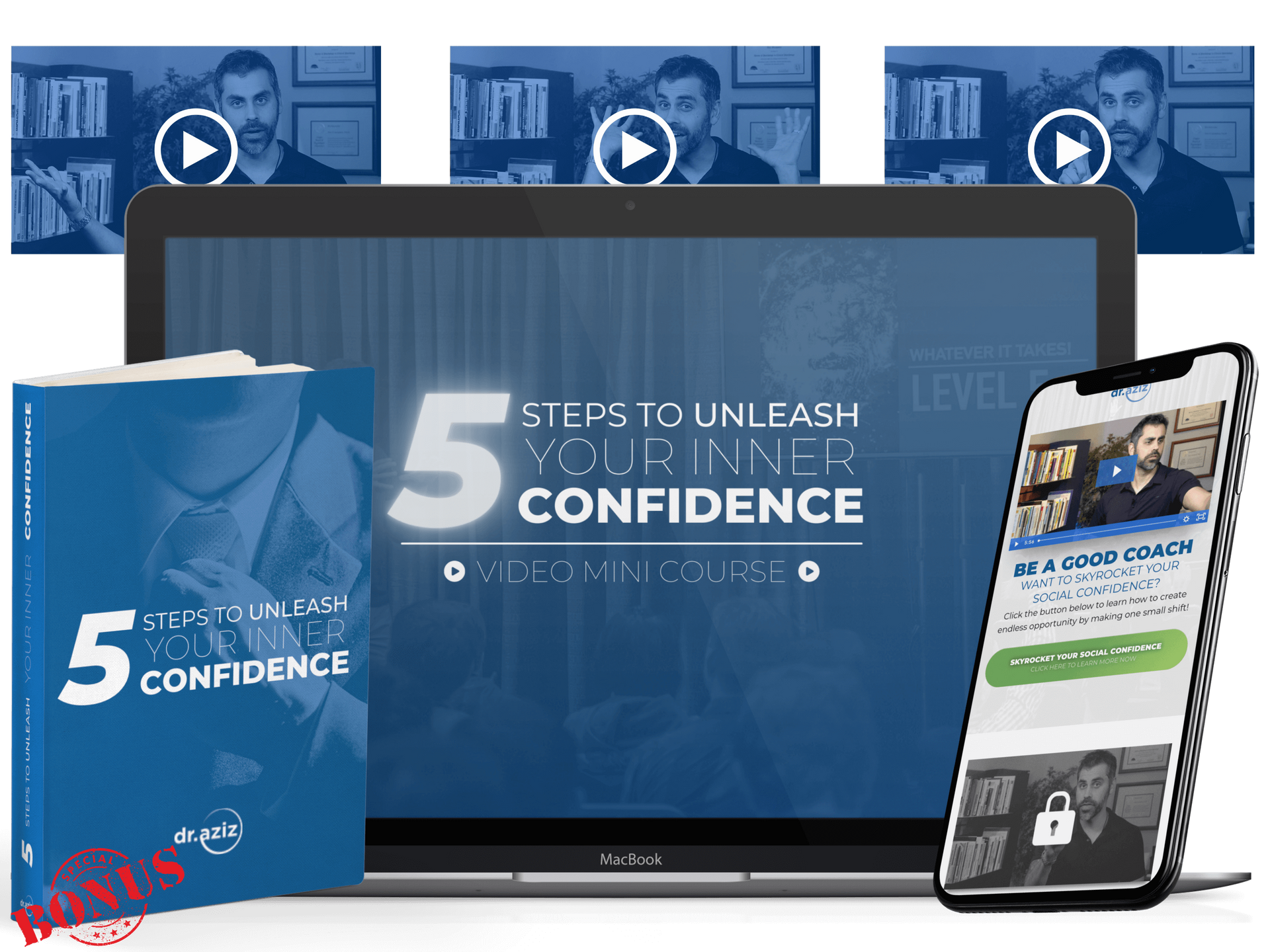
GET YOUR FREE CONFIDENCE MINI-COURSE NOW!
Unleash Your Inner Confidence Today!
Click On The Button Below To Get Your FREE Mini-Course Right Now!
GOT CONFIDENCE?

Confidence University is the culmination of all my years of work assisting others with overcoming social anxiety and building unstoppable confidence in its place. It's the next best thing to work with me one-on-one.