
Why Your Goals Haven’t Changed for Years
Apr 12, 2026When Goals Don’t Change for Years, It’s Not Laziness. It’s a Story Running the Domain.
Every January, some people feel energized. They review the past year, set new intentions, and feel a genuine sense of forward motion.
Others feel something quieter and heavier.
They look at their goals and notice something uncomfortable. They’re basically the same as last year. And the year before that. And maybe the year before that too.
The wording might change slightly. The tone might be more cautious or more ambitious. But underneath, the direction hasn’t shifted.
Most people don’t say this out loud. They tell themselves they’re being realistic. That life has been complicated. That timing hasn’t been right.
And sometimes that’s true.
But often, something else is going on.
The Mistaken Moral Story About Stagnation
When goals don’t change, people tend to turn it into a character issue.
They assume they’re unmotivated. Or inconsistent. Or secretly lazy. They think, If I really wanted this, I would have done something by now.
That self-judgment misses the real mechanism.
Stagnation is rarely about effort. It’s about identity.
More specifically, it’s about a story that has quietly taken over decision-making.
How Stories Begin to Run the Domain
At some point, often after disappointment or repeated frustration, people draw conclusions.
This isn’t really possible for me.
I’ve tried versions of this before.
Other people can do this, but not me.
Those conclusions don’t always feel dramatic. They feel sober. Mature. Like lessons learned the hard way.
But once a story like that settles in, it begins filtering everything.
New ideas get evaluated through it. Opportunities get discounted early. Desire gets muted before it has a chance to generate movement.
From the inside, it feels like being careful. From the outside, it looks like being stuck.
Why Smart People Stay Here the Longest
This pattern shows up most often in thoughtful, capable people.
People who can think long-term. People who can imagine consequences. People who don’t want to make impulsive choices.
Those qualities are strengths. But when fear enters the picture, they become tools for restraint.
Instead of curiosity, there’s analysis.
Instead of experimentation, there’s rehearsal.
Instead of movement, there’s refinement.
Years can pass like this.
Not because the person lacks drive, but because their intelligence is being used to protect them from disappointment.
The Quiet Relief of Certainty
One of the most seductive aspects of these stories is the relief they provide.
Certainty, even limiting certainty, calms the nervous system.
Once you’ve decided that something isn’t going to happen, there’s no more tension. No more hoping. No more risking.
In that sense, the story is doing its job. It’s reducing discomfort.
But it’s also quietly closing the future.
Why Trying Harder Doesn’t Break the Pattern
People often respond to this realization by trying to push themselves.
They set more aggressive goals. They promise this year will be different. They add pressure and urgency.
That usually doesn’t work.
Because the story underneath hasn’t changed. You’re asking yourself to act in a way that contradicts your deepest assumptions while still believing those assumptions are true.
That creates internal friction, not momentum.
Eventually, the pressure fades and the goals revert to their familiar shape.
Movement Returns Through Contradiction, Not Conviction
What actually loosens these stories isn’t believing something new.
It’s doing something small that contradicts the old narrative.
Not a dramatic leap. Not a complete reinvention. A lived contradiction.
You commit to something before you feel ready.
You follow an impulse you would usually dismiss.
You stay engaged where you’d normally retreat.
Those moments are uncomfortable. They don’t feel inspiring. They feel destabilizing.
And that’s why they matter.
They give the nervous system new data.
The Role of Commitment in Rewriting the Story
Commitment is often misunderstood as something you make once you feel certain.
In reality, commitment is what interrupts endless internal negotiation.
When you commit, you remove the option to keep circling. You stop evaluating whether you should begin and start dealing with what actually happens when you do.
That doesn’t eliminate fear. It organizes it.
Instead of fear deciding for you, fear becomes something you move with.
Why Goals Change Only After Identity Shifts
Goals don’t really change when you decide to want something new.
They change when your sense of who you are expands.
When you start seeing yourself as someone who can engage, adapt, recover, and continue, your imagination opens. New futures feel plausible. Desire becomes active again.
Until then, the same goals keep repeating, not because you lack ideas, but because your identity hasn’t had a reason to update.
A More Honest Question to Ask
Instead of asking, Why can’t I get myself to change? try asking something gentler and more precise.
What story have I been living inside without realizing it?
That question doesn’t demand immediate action. It invites awareness.
And awareness is often the first crack in the wall.
Letting the Future Reopen
When people begin to see the story for what it is, something loosens.
They don’t suddenly know what they want. They don’t suddenly feel confident.
But the future starts to feel less closed.
Possibility returns, not as certainty, but as movement.
And movement, even small movement, is enough to begin rewriting the story that has been running the domain.
Reading blogs and watching videos online is a start...
When you are ready to radically transform your confidence so you speak up freely, boldly go after what you want, connect easily with others and be 100% unapologetically yourself, coaching is the answer.

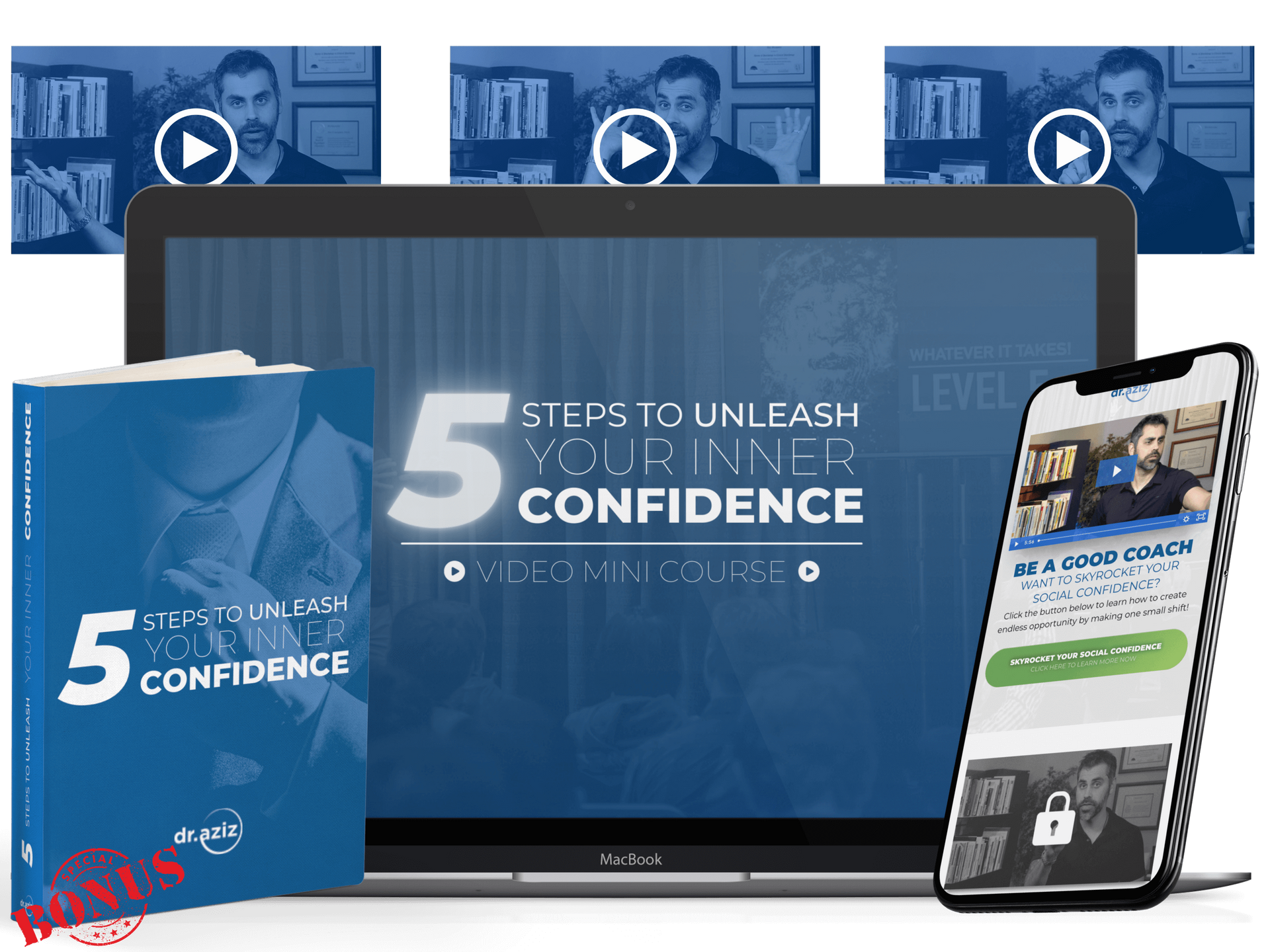
GET YOUR FREE CONFIDENCE MINI-COURSE NOW!
Unleash Your Inner Confidence Today!
Click On The Button Below To Get Your FREE Mini-Course Right Now!
GOT CONFIDENCE?

Confidence University is the culmination of all my years of work assisting others with overcoming social anxiety and building unstoppable confidence in its place. It's the next best thing to work with me one-on-one.