
Why Saying No Makes You Feel So Guilty
Jul 14, 2026
Someone asks you for something.
The word no forms in your head. You can feel it land, clearly, before they've even finished asking. You don't want to do the thing. You know you don't.
What comes out of your mouth is yes.
It happens at work. With your family. With your partner. With your closest friends. The override is faster than your conscious mind. By the time you've registered what you actually wanted to say, you're already committed to the opposite of it.
You've probably called this people-pleasing, or being too nice, or I just need better boundaries. You've maybe read the books. Taken the workshop. Decided that this time would be different. And then in the moment, the override fires again, and the cycle restarts.
Here's the part most people miss. The advice to just have better boundaries fails for a specific reason. It addresses the symptom, not the layer where the pattern actually lives. You don't say yes because you forgot you had the option to say no. You say yes because some part of your nervous system has decided that saying no is dangerous, and that part is faster than your conscious thought.
Once you can see what's actually running underneath the override, the work shifts. It stops being about willpower and starts being about something you can actually move.
The Trap That Makes Both Yes and No Feel Terrible
Here's the cruel mechanic of this pattern. Even when you do manage to say no, the relief you expected doesn't arrive.
You'd think it would. You held the line. You said the thing. You took care of yourself. But instead of relief, what you feel is a wave of guilt, self-criticism, and second-guessing. I should have said yes. What was wrong with me? I'm so selfish.
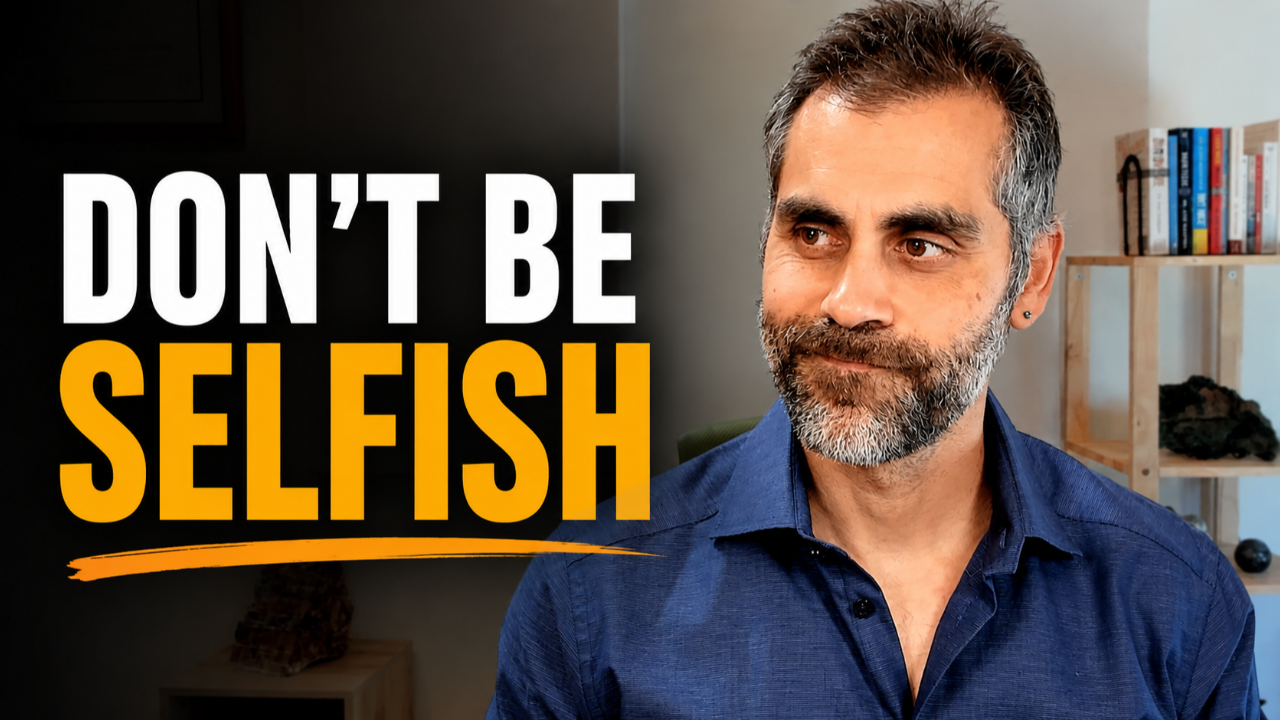
That last word comes up often with the people I work with. Selfish. Spoken with surprising venom against themselves, usually for the crime of having declined to do something they didn't actually want to do.
So you can't win. Say yes and you do the thing you didn't want to do. Say no and you beat yourself up for hours, sometimes days, sometimes longer. The pattern has structured itself so that both exits are painful.
This is what I call the approval trap. You're caught in a system where having to be something for other people is the only condition under which you're allowed to feel okay. And the people who run this pattern most intensely have usually been running it for two or three decades before they consciously notice it.
The Pattern Behind the Override
When your nervous system reads disapproval as danger, it picks one of four strategies to keep you safe. I've worked with this in thousands of clients over the years. There are four. I haven't found a fifth.
The one I'm describing here is the Fixer. It's the pattern that fires hardest around the question of saying no.
The Fixer is the emotional barometer of every room they walk into. Highly attuned. Highly perceptive. They feel what other people are feeling. They track tension. They notice when someone is upset before that person has named it. From the outside, this often gets praised. They're so caring. Such a good listener. So thoughtful.
What the praise doesn't see is the cost. The Fixer has internalized the equation I am okay only if you are okay. If you are upset, distressed, or disappointed, the Fixer cannot fully settle until you are settled. Their nervous system has taken on the work of managing your emotional state as a precondition for being able to have their own.
So when you ask the Fixer for something they don't want to do, the math fires immediately. If I say no, they'll be disappointed. If they're disappointed, I'm not okay. So I have to say yes to be okay. The word no never gets a fair hearing.
I'll be honest about this part. I'm a Fixer. When I take my own quiz, that's the pattern that comes up. I ran it for so many years that I didn't realize I was running it. It was just who I was.
The Two Levels of Fixing
Here's the part most Fixers don't realize they're doing.
The visible level is the one I just described. Someone asks. You don't want to do the thing. You say yes anyway. That's the obvious form.
The less visible level is anticipatory. You don't even wait for them to ask. You imagine what they might want from you and you preemptively offer it. They probably want to do this Saturday, so I'll suggest it first. From the outside, this looks like thoughtfulness. From the inside, it's a kind of preemptive self-erasure. The Fixer figures out what the other person wants before they have to ask, so that the Fixer never has to face the moment of being asked and not wanting to give.
I had a specific moment that made this clear to me. I was dating someone in Portland years ago. There's a thing that happens at certain times of year where these little birds called swallows come out of an old chimney in the evening. They form huge swarms. People pack picnics and watch them. Lovely thing if you're into that kind of thing.
She wanted to go. She asked me on a Thursday night. I want to go see the swallows.
The honest answer inside me was no. I'd had a long week. I wanted to be home alone. I didn't want to drive across town and stand in a crowd watching birds. That was the truth of my internal experience.
What I said out loud was yes.
Here's the part that's worth sitting with. Even after I'd said yes, I wasn't entirely sure I was allowed to say no. I cycled through it in my head. Maybe if I had a really good reason. But I don't have a really good reason. I just don't feel like it. That's not a good enough reason. So I have to go.
This is the Fixer's second-stage trap. Even when you find the courage to consider saying no, you immediately demand of yourself that you have an airtight justification. I don't feel like it doesn't count. I just want to be alone doesn't count. The standard for a legitimate no has been set so high that almost nothing you actually feel can clear it.
So I went to see the swallows. I performed enthusiasm. The relationship eroded slowly over months, in part because she was building intimacy with a version of me that wasn't quite there.
The Fixer in Relationships
This pattern is particularly punishing in close relationships, because the more important the relationship is, the higher the stakes of disapproval feel, and the more the override fires.
A common dynamic I see with Fixers is that they end up in relationships that get progressively more lopsided. The Fixer over-gives. The other person, even if they're a reasonable person, gradually adjusts to the over-giving as the new baseline. What started as generous starts to be expected. What started as expected starts to be insufficient.
In the most painful version, Fixers end up in relationships with people who have something closer to an entitled pattern. The Fixer is wired to over-give. The other person is wired to under-give and expect more. The math compounds. Years go by. The Fixer ends up depleted, resentful, and unable to articulate what went wrong, because nothing dramatic happened. Just thousands of small yeses, none of which felt important enough to question at the time.
The version I've seen most often isn't even that extreme. Most Fixers end up with reasonable partners who would never describe themselves as demanding. The over-giving is mostly happening from the Fixer's side, in advance of any actual demand. The partner asks for one thing. The Fixer delivers four. The pattern is generated by the Fixer's nervous system, not by anything the other person has asked for.
This is what I mean when I say the pattern is running the relationship, not the relationship running the pattern. The fix isn't to find better people. The fix is to update the wiring underneath.
If this is starting to land, the 2-minute quiz at draziz.com maps the specific pattern you run. The Fixer is one of four. Most people don't see which one is theirs until it's named for them.
What's Actually Missing
Underneath every Fixer pattern I've worked with, the missing piece is the same. It's not a skill. It's not a technique. It's a permission.
The Fixer has not given themselves permission to have preferences. To have needs. To want things that someone else doesn't want. To want things even when they can't fully justify why. To want to be alone on a Thursday night for no reason other than that they want to be alone.
That permission was usually removed early. The Fixer learned, at some point, that having preferences was a burden. That having needs was selfish. That wanting something the other person didn't want was a threat to connection. So the part of them that has preferences went underground. The part of them that scans for what other people need stayed on the surface.
Twenty years later, the underground part is still down there, but the surface part has been running the show so long that the Fixer has lost contact with what they actually prefer. What do I want for dinner? turns into a real puzzle. What do I want to do this weekend? turns into asking the other person first and then mirroring back.
The work isn't to perform preferences you don't yet feel. The work is to slowly restore access to the part of you that does. And then, once contact has been re-established, to give that part permission to actually have its preferences out loud. With the people who matter. About things that aren't life-or-death.
This is slower work than just say no. It's also the work that actually changes things.
The Right Thing Will Feel Wrong
Here's a saying I use with every client who starts doing this work. It's the most useful single line I know on this subject.
The right thing will feel wrong.
When you start saying no, you're not going to feel relieved. You're going to feel guilty. You're going to second-guess yourself. You're going to lie awake at night replaying the conversation and wondering if you should have just said yes. The internal feedback your nervous system gives you, when you do the healthy thing, is bad job, fix this, you screwed up.
That feedback is wrong, but it feels right.
This is what most people don't understand about recalibrating. The nervous system has been running on the say yes, feel okay equation for so long that any deviation from the equation registers as a malfunction. The system is functioning correctly when it punishes you for saying no, because that's what it was wired to do.
What changes is what you do with the feedback. If you interpret the guilt as a signal that you did something wrong, you'll reverse course and say yes next time. If you interpret it as a signal that you're recalibrating a long-standing pattern, you can sit with it, let it pass, and notice over time that the guilt loses its grip.
The first few times you say no and don't immediately apologize, the guilt will be loud. The tenth time, it'll be quieter. The fiftieth time, you'll start to notice you can say no without the guilt firing first. That's the rewiring happening in real time.
You're not trying to feel different about saying no. You're trying to act in accordance with what's healthy, even while your nervous system protests, until the nervous system updates.
What Most People Miss
The Fixer doesn't go away because you decided to stop fixing. The pull toward fixing is built into the wiring. What changes is your relationship to the pull.
When you feel the urge to fix, to say yes, to take care of someone else's emotional experience at the cost of your own, you can ask a different question. Whose feelings am I about to take responsibility for? And whose are mine? The Fixer's confusion has always been about that line. Empathy is feeling someone's experience alongside them. Fixing is taking ownership of resolving it. Those aren't the same thing, and recovering the distinction is where the freedom lives.
You don't owe everyone a yes. You don't owe everyone a good reason. I just don't want to is a complete sentence in adult life, even if your nervous system can't yet believe it. The first few times you use it, you'll feel terrible. That's the feedback being wrong on purpose. Stay with it. The system updates.
The version of you that doesn't need to manage everyone else's emotional state is not a future version. It's the version that's been waiting underneath the Fixer for twenty years.
You're allowed to come back to it. Even on a Thursday night. Even without a good reason.
Discover your approval type. Take the 2-minute quiz at www.draziz.com
The Fixer is one of four. You'll find out which pattern is running underneath what you've been calling people-pleasing or just being too nice, how it shows up in your relationships and at work, and what actually shifts when you stop trying to fix the symptom and start working with the layer where the pattern lives.
Reading blogs and watching videos online is a start...
When you are ready to radically transform your confidence so you speak up freely, boldly go after what you want, connect easily with others and be 100% unapologetically yourself, coaching is the answer.


GET YOUR FREE CONFIDENCE MINI-COURSE NOW!
Unleash Your Inner Confidence Today!
Click On The Button Below To Get Your FREE Mini-Course Right Now!
GOT CONFIDENCE?

Confidence University is the culmination of all my years of work assisting others with overcoming social anxiety and building unstoppable confidence in its place. It's the next best thing to work with me one-on-one.