
Why Wanting People to Like You Keeps You Stuck
Feb 22, 2026Most people who struggle socially don’t think of themselves as approval-seeking.
They think of themselves as thoughtful. Considerate. Aware of others. They notice tone. They read the room. They don’t want to impose. They don’t want to be “that person.”
And from the outside, that often looks like kindness.
But underneath it, there is usually something else happening. Something tighter. Something more effortful.
A quiet, ongoing attempt to manage how other people experience them.
The Subtle Difference Between Wanting Connection and Needing Approval
There’s nothing wrong with wanting to be liked. That desire is built into us. Humans bond. We orient toward each other. We look for cues of safety, warmth, and acceptance.
The problem doesn’t begin with wanting a connection.
It begins when the desire hardens into necessity.
When approval becomes something you need in order to feel okay in the moment, your internal posture changes. Your attention shifts outward. Your body tightens. Your words start to feel slightly rehearsed, even when you’re being spontaneous.
Most people can feel this happening in their bodies if they slow down enough. Often it shows up as a contraction in the chest or upper abdomen. A subtle leaning forward. An invisible reaching.
That reaching is what others feel.
Not consciously, most of the time. But they sense it.
Why Trying Harder Backfires
One of the most painful paradoxes here is that the more you try to be liked, the less natural you feel.
You might say the right things. You might smile at the right moments. You might be agreeable, attentive, and polite.
And yet something feels off.
It’s not because you’re doing anything wrong behaviorally. It’s because the interaction is no longer an exchange. It’s a performance.
When approval becomes the goal, the interaction stops being mutual. You’re no longer meeting the other person. You’re orienting around them.
That creates pressure, both for you and for them.
And pressure repels connection.
The Black Hole Feeling No One Talks About
Many people describe approval-seeking as a kind of hunger. A sense that something needs to be filled.
When someone responds warmly, there’s a brief sense of relief. When they don’t, the discomfort intensifies.
What’s rarely talked about is how this creates a kind of blindness.
When you’re attached to approval, you often miss the approval that’s already there.
Someone nods, but you’re watching for the smile.
Someone listens, but you’re tracking their reaction.
Someone stays engaged, but you’re waiting for reassurance.
So even when a connection is happening, it doesn’t land.
That’s one of the most exhausting parts of this pattern. You can be surrounded by people and still feel unseen, not because you are unseen, but because you can’t receive what’s being offered.
Why This Pattern Is So Persistent
Approval-seeking isn’t a flaw. It’s an adaptation.
For many people, especially those who grew up sensitive, perceptive, or emotionally attuned, reading others became a way of staying safe. It reduced conflict. It preserved the connection. It kept things manageable.
Over time, that skill became a defining part of my identity.
“I’m the easy one.”
“I’m good at reading people.”
“I don’t rock the boat.”
The cost is that your internal state becomes dependent on external feedback.
And that dependency is what creates anxiety, stiffness, and self-consciousness.
Not because you care about others, but because you’ve outsourced your sense of okay-ness.
Why Letting Go Feels So Uncomfortable
When people hear “let go of approval-seeking,” they often imagine becoming cold, selfish, or indifferent.
That’s not what actually happens.
What happens instead is unfamiliarity.
When you stop managing how you’re perceived, there’s a moment where you don’t quite know how to stand. Your usual reference points are gone. You’re not tracking reactions as closely. You’re not adjusting in real time.
That can feel exposed at first.
There’s often a moment where the nervous system says, “Wait. Who’s in charge now?”
That moment is the doorway to something new.
From Grasping to Allowing
The shift isn’t from caring to not caring.
It’s from grasping to allowing.
When you’re no longer trying to pull approval toward you, something else becomes possible. Your attention comes back inside. Your body settles. Your words become less strategic and more responsive.
Ironically, this is when people often respond more positively.
Not because you’re trying harder, but because you’re finally present.
You’re no longer pulling on invisible strings. You’re standing where you are and letting the interaction unfold.
What Real Confidence Feels Like Here
Confidence in this domain doesn’t feel like boldness or charisma.
It feels like spaciousness.
You say what you want to say without constantly checking how it landed. You notice responses without making them mean anything immediately. You allow silence without rushing to fill it.
You’re not numb. You’re not detached.
You’re just no longer dependent.
And that changes the quality of the connection entirely.
A Different Question to Practice
Instead of asking, “Do they like me?” try noticing something else.
“Am I here?”
That question quietly reorients your system.
When you’re here, approval stops being something to chase. It becomes something that may or may not happen, without defining you either way.
Over time, this creates a steadier sense of self. One that doesn’t disappear when reactions are neutral, distracted, or ambiguous.
And that steadiness is what makes the connection feel real instead of effortful.
If you want to build confidence that doesn’t depend on managing other people’s reactions, and learn how to feel grounded and present in connection, the next step is to engage in deeper work.
Unstoppable Confidence Mastermind
https://www.socialconfidencecenter.com/ucmv3
Reading blogs and watching videos online is a start...
When you are ready to radically transform your confidence so you speak up freely, boldly go after what you want, connect easily with others and be 100% unapologetically yourself, coaching is the answer.

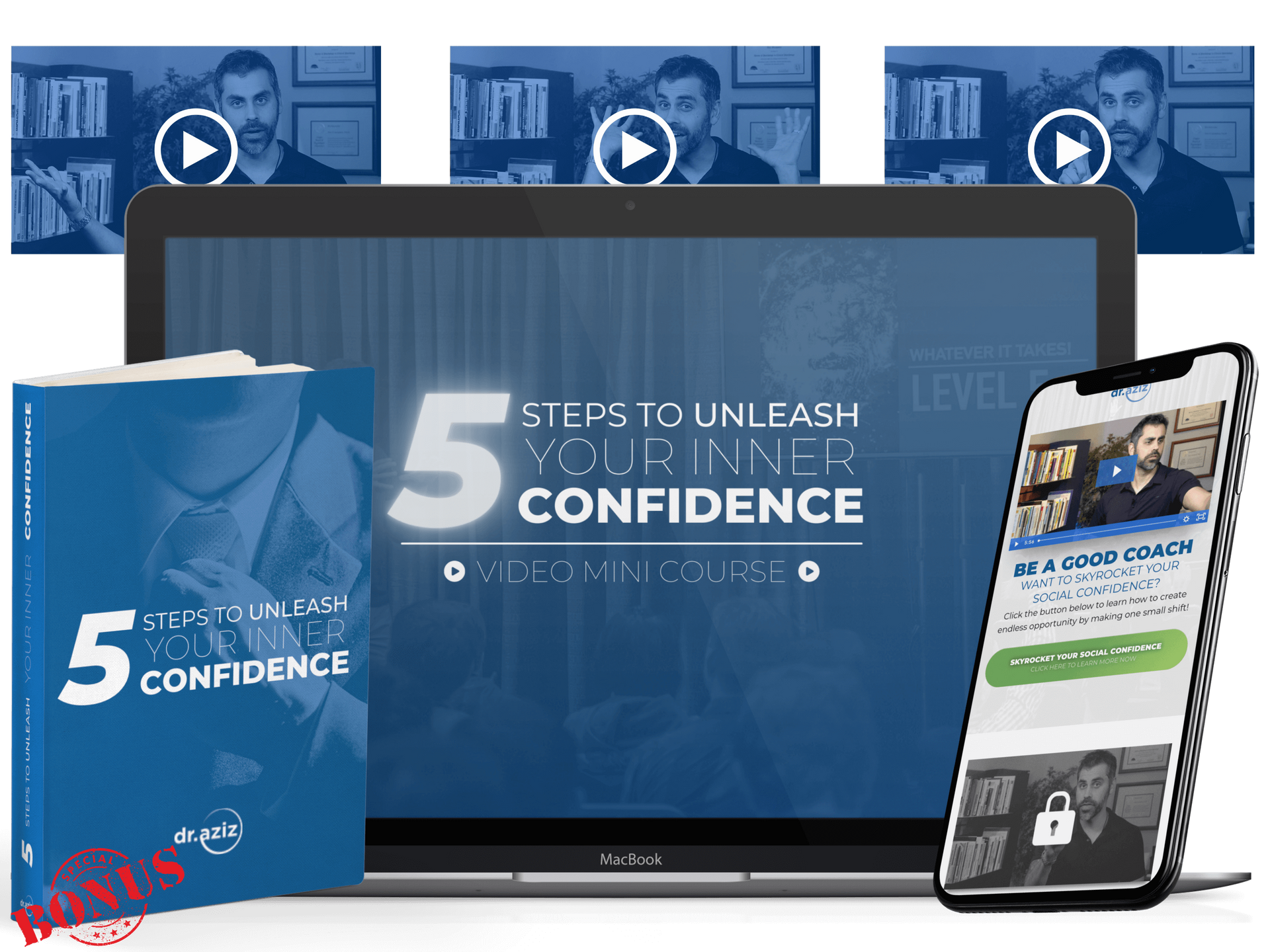
GET YOUR FREE CONFIDENCE MINI-COURSE NOW!
Unleash Your Inner Confidence Today!
Click On The Button Below To Get Your FREE Mini-Course Right Now!
GOT CONFIDENCE?

Confidence University is the culmination of all my years of work assisting others with overcoming social anxiety and building unstoppable confidence in its place. It's the next best thing to work with me one-on-one.